

Smart traffic monitoring solution
1. Industry security needs and pain points
Road traffic is the main artery of urban operation. Monitoring points are scattered at intersections, road sections, bridges, tunnels and checkpoints, and the environments vary greatly. The requirements for video systems in traffic scenes are significantly higher than those for ordinary security: it must not only see vehicles and license plates clearly, but also support law enforcement evidence collection and management decision-making. The following pain points are common in actual construction:
- Harsh light conditions: Backlighting in the morning and evening, sudden changes in light and darkness at tunnel entrances and exits, and interference from high-beam lights at night make it easy for ordinary cameras to be overexposed or completely black, making license plates unrecognizable.
- High requirements for evidence collection: Illegal evidence collection images must meet clarity, timestamp and continuity requirements at the same time. Video frame loss or time out of sync will directly affect the effectiveness of the evidence.
- Difficulty in obtaining electricity and network at certain points: The poles at the intersection are scattered, and the cost of laying out power supply and optical fiber separately is high, the cycle is long, and later expansion is inconvenient.
- Difficulty in operation and maintenance: There are a large number of front-ends and they are widely distributed. It is difficult to detect equipment disconnections, dirty lenses, and angle deviations in a timely manner. Faults are often discovered only when the video is retrieved.
2. Construction Goals
- Main roads, intersections, and checkpoints are fully covered by video, and there are no blind spots in key lanes.
- The number plate recognition rate during the day and night meets the actual requirements, and it is available in backlight, rain and fog weather.
- Video storage meets the regulatory retention cycle and supports quick retrieval by license plate, time, and location.
- The operating status of the equipment can be monitored remotely, faults can be proactively alarmed, and on-site inspection costs can be reduced.
3. Overall system architecture
The solution adopts a four-layer architecture of "front-end collection - network transmission - storage management - business application". The responsibilities of each layer are clear and can be constructed in phases:
- Front-end collection layer: High-definition network camera, bayonet capture unit, fill light, protective cover and pole, responsible for image collection and preliminary encoding.
- network transport layer: After aggregation at the intersection switch, it is backhauled via optical fiber or wireless bridge, supporting VLAN isolation and bandwidth planning to prevent video streams from impacting the office network.
- storage management layer: The central computer room deploys network hard disk video recorders and storage servers to complete video writing, backup, retrieval and unified management of equipment.
- Business application layer: Real-time preview, video playback, license plate retrieval, illegal evidence collection, equipment operation and maintenance and large-screen wall display, supporting hierarchical authorization.
4. Key point layout and equipment selection
| point | Recommended models | Key parameters | Monitoring target |
|---|---|---|---|
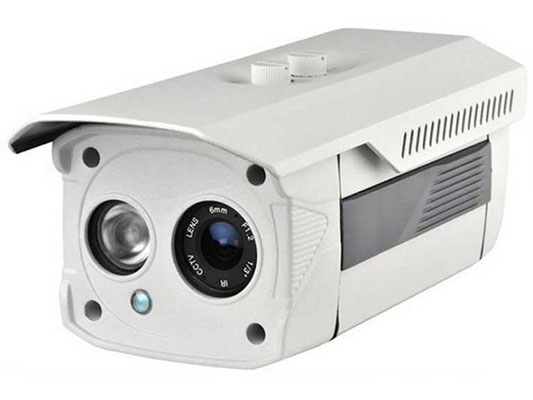
| intersection lane | High-definition network infrared waterproof camera (more than 2 million pixels) | Ultra wide dynamic range ≥120dB, low illumination, strong light suppression | Lane traffic status, license plate and vehicle type |
| security bayonet | Bayonet capture unit + strobe fill light | Adjustable shutter, supports coil/video dual trigger | Vehicle passing records, license plate recognition, deployment and control comparison |
| Full monitoring of road sections | Network infrared waterproof camera + zoom lens | Long-range infrared, IP66 protection | Road condition inspection, accident review |
| tunnel/bridge | Wide dynamic low illumination model | Strong light suppression, anti-shake, corrosion-resistant shell | Stable imaging in the transition zone between light and dark |
| Panorama of intersection | HD network dome machine | Large magnification zoom, preset position cruise | Overall situation control and event tracking |
5. Core functions and business value
- HD imaging: With a resolution of 2 million pixels and above, combined with ultra-wide dynamic range and 3D noise reduction, it is also clearly legible under backlight and at night.
- Intelligent identification: Support license plate, car model, body color recognition and blacklist control, and push alarm information in real time.
- Quick search: Search based on a combination of time, point, and license plate, and locate the target clip in seconds from massive videos.
- Visible operation and maintenance: Device online status, hard disk health, and code stream abnormalities are displayed in a centralized manner, and work orders are automatically generated for faults.
- Expansion by installments: Build the main roads and checkpoints first, and add branch points later as needed. There is no need to tear down the structure and start over.
6. Implement delivery and service guarantee
- Site investigation: Survey poles, power and network conditions, lighting angles, and issue point maps and wiring plans.
- Installation and debugging: Standardize construction, unify pole grounding and lightning protection, and adjust angle, focal length and fill light intensity point by point.
- Joint debugging test: Complete video integrity, time synchronization, recognition accuracy and alarm link verification.
- Training handover: Deliver operation manuals and train on-duty personnel on daily operations and common fault handling.
- After-sale guarantee: Complete machine warranty, providing remote technical support and spare parts supply, and supporting annual inspections.
7. Typical configuration suggestions
Recommended configuration for a single standard intersection: 4 lane capture/surveillance cameras + 1 panoramic dome camera + 1 intersection switch (PoE power supply) + center-side storage capacity calculated based on 30 days of retention. If a longer retention period is required, the hard drive capacity can be increased or a combination of central centralized storage and front-end local storage can be used. The specific configuration needs to be calculated item by item based on the number of lanes, speed limit levels and retention days.
Related Products
-a188c327.jpg)


Consult about this solution
Leave your requirement and we will contact you soon.